
 BED BUGS
 SCORPIONS
 RODENTS
 BEES
 MOSQUITOS
 TAP INSULATION
 PEST PROTECTION PLAN
 WEEDS

The first big monsoon storm rolls through, the air finally feels humid, and that evening you notice a cloud of winged insects swirling around your porch light. Plenty of Phoenix homeowners see it every summer and wonder the same thing: what are these, and should I worry? More often than not, the answer is termites. In Arizona, monsoon season is termite swarm season. Here’s what that means for your home.
Those Winged Insects After the Storm Are Probably Swarmers
The winged termites you see are called swarmers, or alates. They’re the reproductive members of a mature colony, sent out to mate and start colonies of their own. They’re weak fliers, so they gather around lights and windows, and once they land, they drop their wings. If you find little piles of discarded wings on a windowsill or by the door, a swarm has already come through.
According to the University of Arizona Cooperative Extension, the desert subterranean termite, Arizona’s most destructive species, takes flight after monsoon rains from July through September. So a swarm on a humid August night is right on schedule.
Why Monsoon Rain and Termites Go Together
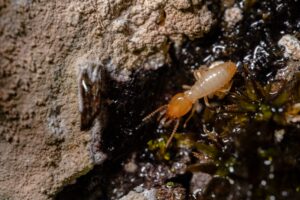
Subterranean termites live underground and depend on soil moisture to survive. Through Arizona’s dry months, that moisture is scarce, so when a monsoon finally soaks the ground, it jump-starts their activity and sets off the swarms.
That same moisture is what steers them toward your home. Water pooling against the foundation, an overrun irrigation line, or a roof that dumps runoff right by the wall all create the damp soil and wood that termites are hunting for. It’s why homes with drainage or irrigation issues tend to see the most pressure after a storm.
What a Swarm Means for Your Home
A swarm doesn’t automatically mean your house is infested, but it does mean that termites are active nearby, and that’s worth paying attention to. Subterranean termites are quiet and slow, and they can feed on wood framing for a long time before anyone notices.
That’s what makes them so costly. Termite damage builds up out of sight, and standard homeowners insurance usually doesn’t cover it, so catching it early makes a real difference. After a monsoon swarm, the sign to watch for is mud tubes, the pencil-width dirt tunnels that subterranean termites build along foundations, walls, and plumbing.
How to Protect Your Home During Monsoon Season
A few steps go a long way toward making your home less appealing once the rains arrive:
- Move water away from the house by keeping gutters clear and pointing downspouts away from the foundation.
- Fix leaks and adjust irrigation so water isn’t pooling against the walls or soaking the soil next to the slab.
- Clear away wood-to-soil contact, including scrap lumber, firewood, and debris stacked against the foundation.
- Watch for the warning signs after a storm, especially discarded wings, mud tubes, and wood that sounds hollow.
- Schedule a professional termite inspection, since a trained tech can spot activity long before the damage shows.
When to Take ACTION
If you’re seeing swarmers or wings around your Phoenix home, it’s worth getting a professional set of eyes on it. Termite control is our specialty at ACTION Termite & Pest Control, and it has been since 1969. Our licensed technicians handle thousands of termite inspections and treatments across the valley every year, and they’ll identify exactly what you’re dealing with and walk you through your options.
Don’t wait for the damage to add up. Call ACTION at (602) 899-2222 to schedule a free termite inspection, and take ACTION against pests this monsoon season.